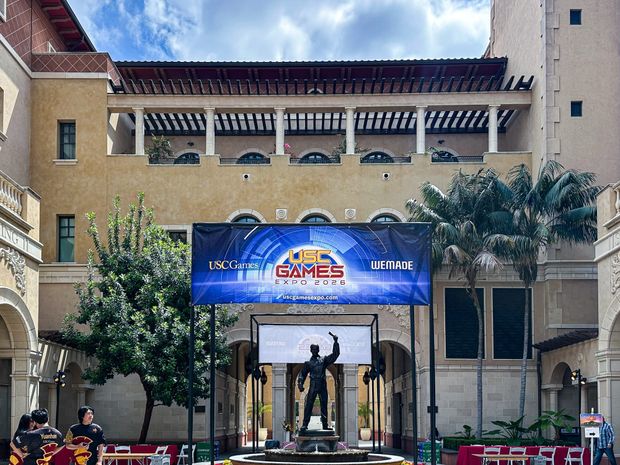
WEMADE participated as the main sponsor at USC Games Expo 2026, held in Los Angeles, USA, last May.
USC Games Expo is one of the world’s largest university game showcases, providing a platform for students to present games they’ve created themselves to industry professionals and visitors. Celebrating its 10th anniversary this year, the event featured more than 60 games developed through USC Games courses.
What games did WEMADE employees see there, and what conversations did they have with the students?
Q. Please briefly introduce yourself and share your perspective on this year’s USC Games Expo 2026.
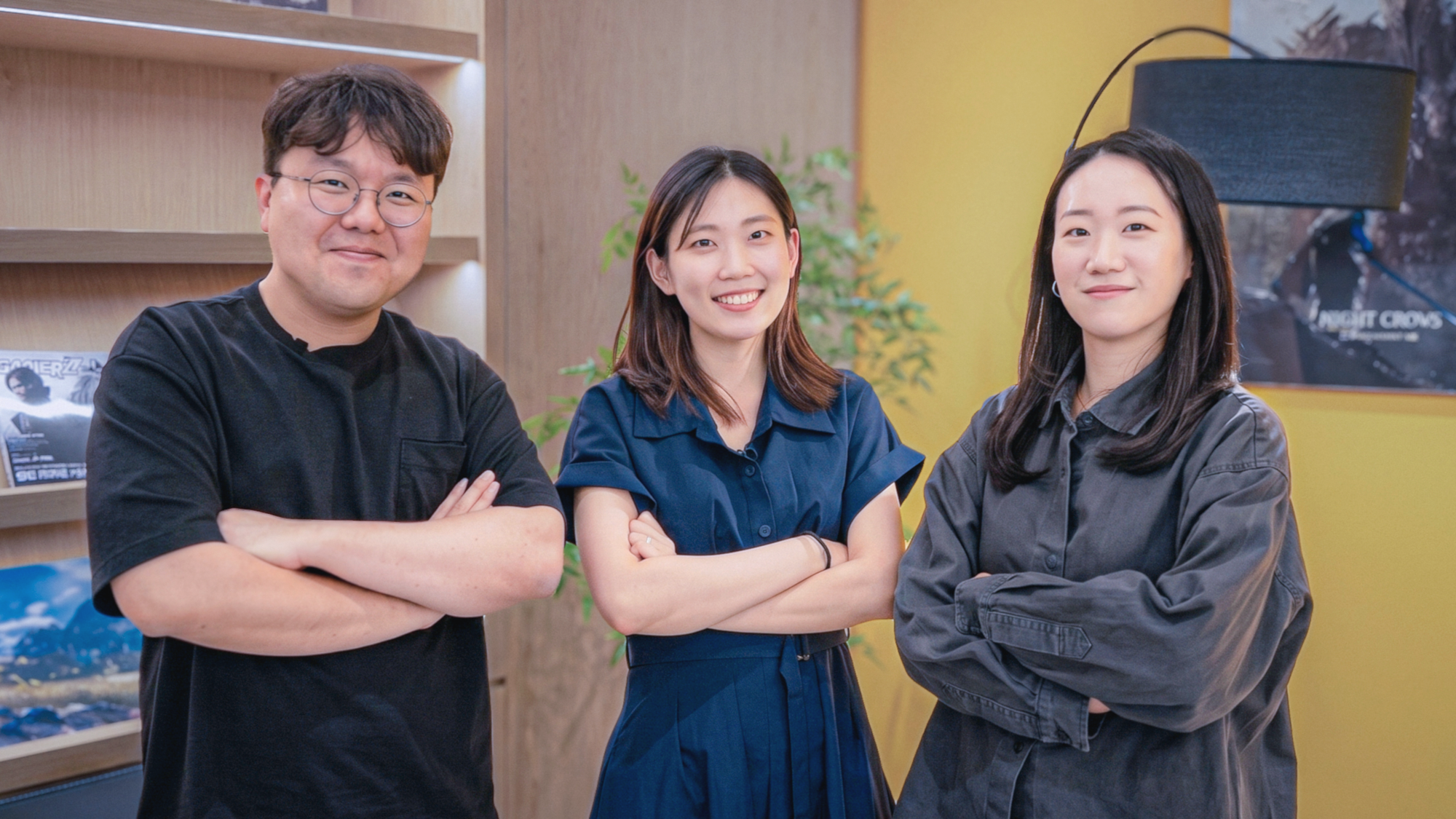
Ji-hyun: I’m in charge of BI data analysis and company-wide business process improvement in the Business Strategy Team. Since I often analyze the market and the company through data, my attention was naturally drawn to the potential of the games created by the students during this visit. Rather than simply thinking, “Oh, it’s just a student project,” and moving on, I looked at it from the perspective of whether this game could succeed in the market if it were refined a bit more.
Yun-byeong: I’m in charge of game publishing strategy on the Business Strategy Team. I wanted to see firsthand what kind of games the next generation of creators enjoy and what they consider to be a good game.
Chan-hye: I’m in the HR team, where I handle overall HR management tasks, including system improvements and labor relations. As an HR professional, I was particularly struck by the environment in which the students were learning and how they organized their teams to complete their projects. I felt that the process of bringing people together, assigning roles, and seeing a project through to completion to create a single game closely resembled how projects are handled in a real company.
Q. What was your first impression of the atmosphere when you arrived at the USC Games Expo?
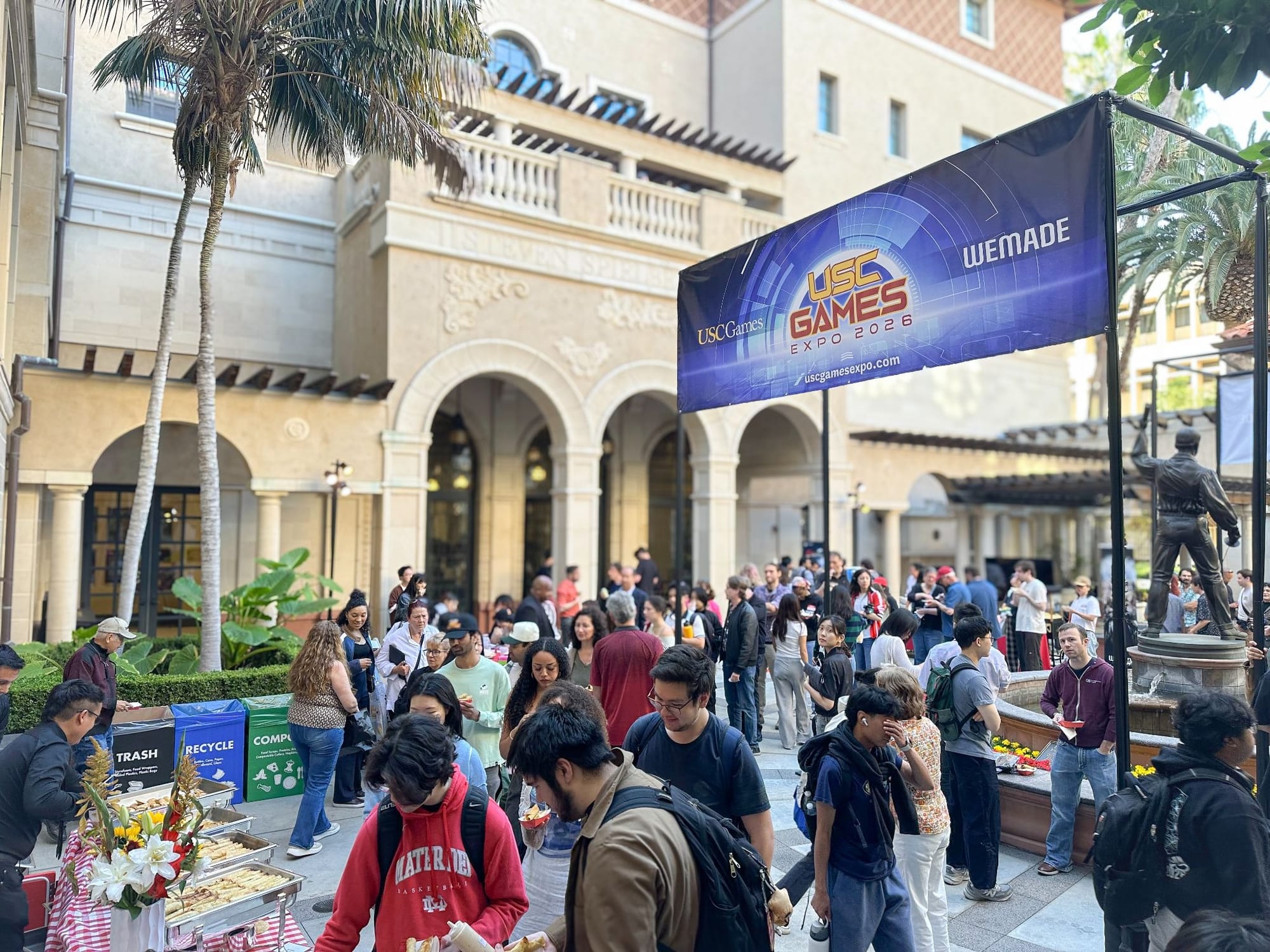
Ji-hyun: Since USC Games is a program jointly run by the USC School of Cinematic Arts and the Viterbi School of Engineering, I noticed many works on-site that seamlessly blended engineering and the arts. Perhaps because of this, I got the impression that it was more than just a game exhibition—it felt like a comprehensive arts festival.
Chan-hye: My first thought was, “It feels like a festival.”
It wasn’t just an event for students—it was an atmosphere where faculty, alumni, industry professionals, and visitors gathered together to view and cheer on the students’ projects. Rather than a venue for evaluating someone’s project, it was a place to proudly showcase what we’d created together and enjoy it as a group.
Yun-Byung: I could tell that people who truly love games had gathered here. Even when the students were explaining their games, it didn’t feel like they were simply presenting an assignment. I could feel their passion—they wanted to show us firsthand “why we made this game and what kind of fun we wanted to capture.”
Q. As you walked around the various booths, was there a particular atmosphere that stood out repeatedly, or a common theme you noticed?
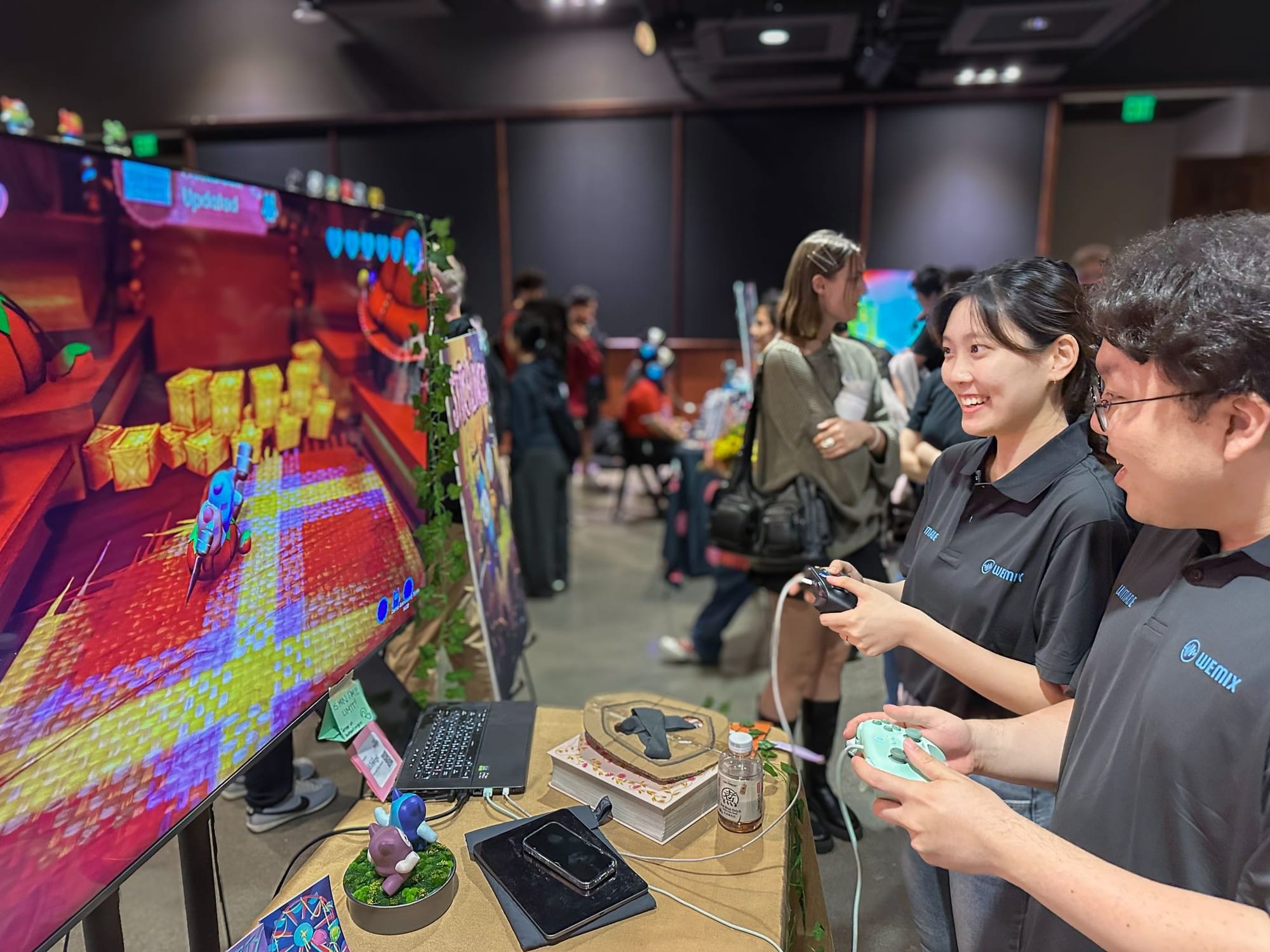
Chan-hye: The first keyword that came to mind was “Family Friendly.”
There were a lot more games you could enjoy with family or friends rather than games where you get completely absorbed and dive deep into them on your own. The characters and UI were also generally cute and familiar, which I think made it feel that way even more.
Ji-hyun: I also noticed a lot of games that could be enjoyed with friends or family. While the nature of the expo likely played a role, games where you chat and laugh with the person next to you—rather than playing quietly alone—seemed to set the tone.
Yun-byeong: While the genres were quite diverse, overall it seemed they were designed with the idea of enjoying the game together in mind, rather than the experience of sitting alone in front of a PC. Whether it was playing casually on a console or enjoying the experience by interacting with the person next to you.
Q. As you looked at the games one by one, how did you feel the students were presenting their games?
Yun-byeong: As I visited various booths, I noticed that for many games, the concept stood out more than the genre. Rather than simply describing the genre by saying, “This is an action game” or “‘puzzle game’” based on genre; instead, it was very clear that they were saying, “We started from this concept.”
For example, the game <Aftertaste> was a title that interpreted the process of food being digested inside the body as a game. The tongue becomes a character, the character moves by climbing the walls of internal organs, and even the narrative arc of losing and then regaining one’s sense of taste was all connected by a single idea. It sounds unfamiliar at first, but when you actually see it, you clearly feel, “Ah, so this game started from this idea.” So overall, I saw many games where the concept came first—literally “concept-driven” games—rather than the genre.
Source: Youtube @USC Games
Chan-hye: That’s right. I could sense that during the opening ceremony as well. Whenever the students introduced their games, they always mentioned, “Our concept started here, we drew inspiration from there, and we completed it through this process.” It was impressive how they didn’t just show the final product, but also explained the inspiration behind the game.
Ji-hyun: It was also interesting that the concept didn’t end with the game itself. You could really feel that the students were passionate about the IP they created.
For example, at the <Stitchlings> booth, they handed out stickers that let you take apart and reassemble the game’s characters—it reminded me of the Avatar stickers I used to play with as a kid. It felt like they weren’t just making a game and calling it a day; I could tell they were thinking about how to further expand this IP.
Q. Among all those games with such distinct concepts, was there any title that particularly stood out to you?
Ji-hyun: For me, <Stitchlings> stands out the most to me. It was a game centered around the concept of sewing, and the art quality was so high that it was hard to believe it was created by students. Everything—from the character UI to the background textures—was meticulously organized around that concept, and I could really feel the determination they had to see a single idea through to the end.
Source: Youtube @USC Games
Chan-hye: I’m a fan of <Stitchlings> too! The quest book looked like a sewn-up book that would pop out if you opened a sewing bag, and the characters’ health bars weren’t just hearts—they were hearts shaped like buttonholes. Even the smallest UI elements were crafted with such meticulous attention to detail to match the concept. I spoke with the creative director, who told me, “We put the most effort into that part, so I’m glad you noticed it,” which made it even more memorable.
Yun-byeong: I’d also like to highlight the same project. I was impressed by how the sewing concept was consistently carried through to the characters, UI, backgrounds, and even the merchandise. The level of polish was so high that I momentarily forgot it was a student project. When I checked later, I saw it was receiving the best response among the USC Games Expo entries on Steam—it was fascinating to see that the impression I had at the event translated into actual market reception.
Q. Just as much as playing the games, the conversations you had directly with the students must have been memorable. Were there any moments that stood out to you?
Chan-hye: I remember the conversations I had at the <Move Move Melon> . It’s a game where a cute hamster swims through waterways to collect ingredients for ice cream. I was watching from behind when the creative director approached me first and spoke very passionately about the role he played, the challenges he faced during development, and the process they went through to complete the game.
Source: Youtube @USC Games
That’s when I realized this wasn’t just a place to present projects. I could sense that it was a place where students genuinely wanted to share the time and thought they had poured into their projects with others.
Yun-Byung: I was at the <B.L.U.E> booth.
It was a mobile mech combat game, and when I first saw it, I thought, “How did the students pull this off?” Games involving mechs are quite difficult to implement. There are many components, and the physical sensations—such as movement, collisions, and combat—are crucial. In particular, it’s not easy to naturally recreate movements within the game that players need to physically feel, like centrifugal force.
Source: Youtube @USC Games
When we talked, they mentioned that there were actually major hurdles during the implementation process. However, rather than trying to solve the problem purely through physical means, they said they resolved it by designing the game so that players would perceive it that way visually. It was fascinating to see how the students interpreted and solved technical challenges in their own unique ways.
Ji-hyun: I remember the conversation I had with the students from <Lucky Duckies> . The game features a rubber duck floating in a bathtub as the main character, and it was a cooperative game that unfolds as a scary bulldog jumps into the tub. Even though the screen was split, the level of polish was much higher than expected.
Source: Youtube @USC Games
What impressed me most was that this team had entrepreneurship in mind from the very beginning. They weren’t just stopping at creating a project; they were already mapping out a roadmap for how to develop the game further. It felt less like a student project and more like the first pitch from a small studio.
Q. Hearing this makes me curious about the process these games went through to be created. How do USC students structure their projects and carry out development?
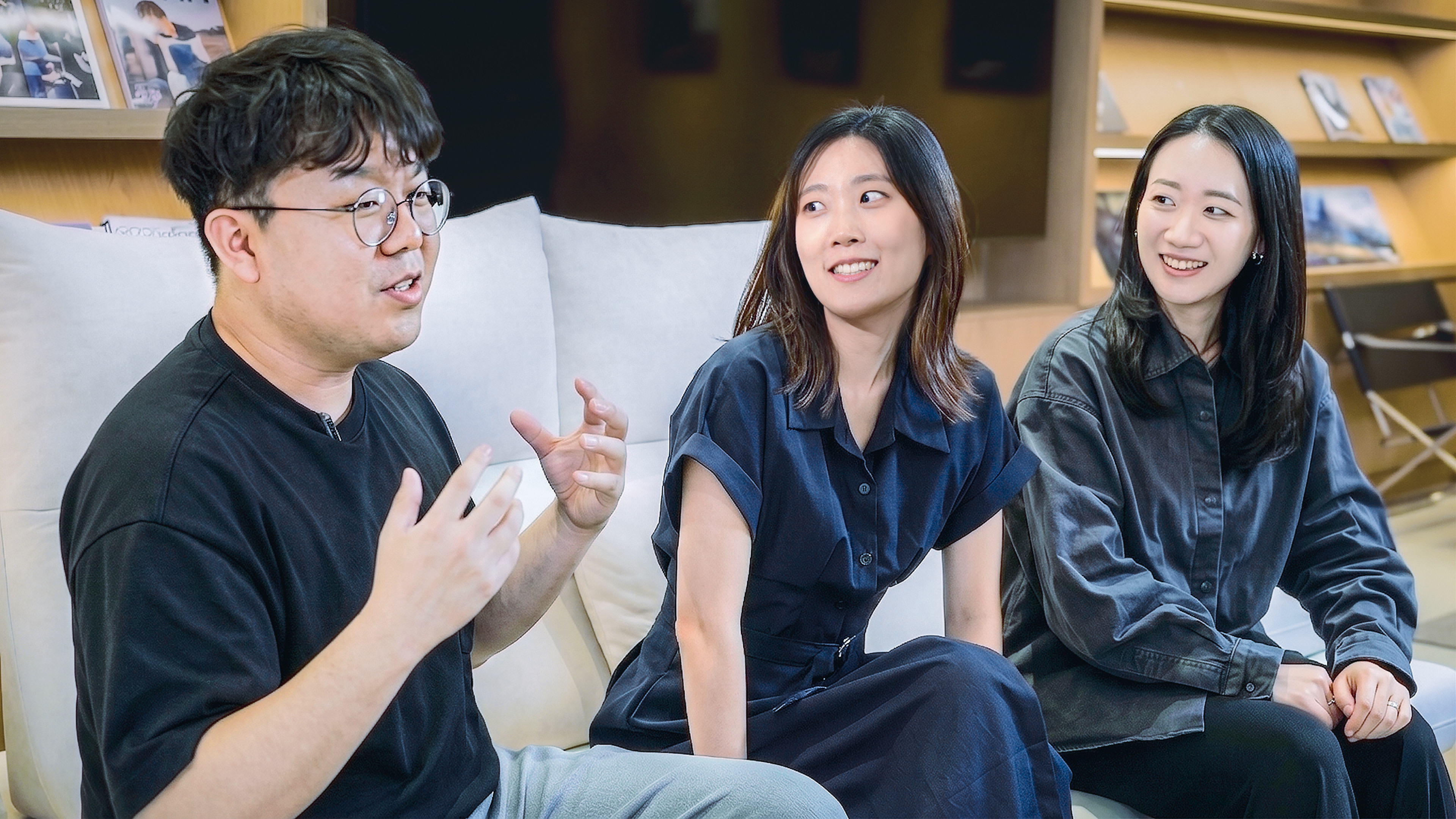
Ji-hyun: Since USC is located in LA, I was impressed by how students learn and work on projects in an environment close to the gaming industry. With a faculty that has real-world industry experience and a well-established mentoring structure, it seemed like students weren’t just completing class assignments—they were gaining experience working just like an actual development team.
In particular, the major games showcased at the expo are the result of the AGP—the Advanced Games Project—a one-year program. Students each propose their own game concepts, and some are selected to serve as creative directors. The selected directors personally assemble their teams and lead the projects for one year . Depending on the project, 30 to 60 students participate, and I heard they develop with the goal of releasing on Steam. That’s why many of the games I saw there felt like they were made by small studios.
Chan-hye: I was also particularly impressed by that process. Just leading a single project for a year is a huge experience in itself, but I saw that the creative directors also went through the process of posting job listings, conducting interviews, and recruiting team members themselves. They also gained experience managing teams by appointing leaders for each department.
In fact, among the students I interviewed, one said they selected team members based on whether “this person’s development style would be a good fit for me,” while another mentioned they were looking for like-minded people with an eye toward starting their own company in the future. I was impressed—and quite surprised—that they already had such a mature perspective on teams and people while still in school.
Q. What was the most significant takeaway for each of you from this USC Games Expo?
Ji-hyun: Usually, when you go to a game conference, you mostly see and hear about highly polished games from established companies, right? But the USC Games Expo was a little different. I was able to see up close what inspires the next generation of creators who will lead the industry in the future, and the sensibilities they bring to game development. It also made me realize that just because these are games made by students doesn’t mean they should be taken lightly. I felt it would be great to continue interacting with students who love games this much and take on challenges in their own unique ways.
Chan-hye: What left the biggest impression on me was the network among students, alumni, and faculty. I could really feel that the support and connections of so many people went into producing the final results. I was particularly impressed by the network that continues even after graduation, the environment that supports entrepreneurship, and the role of the faculty in providing a springboard into society. Even after returning to the company, it made me reflect once again on how important it is to create an environment where our team members can fully demonstrate their capabilities.
Yun-byung: What I found most interesting was how the experiences students had with games they enjoyed as children naturally carry over into the games they’re creating now. It seemed that the games they liked ultimately became the standard for what they consider a “good game.” That’s why I realized I need to pay closer attention to what games young players are playing today. After all, their current gaming experiences could become the creative standards for someone else in the future.
Games that families and friends can enjoy together.
Works that took a single concept all the way through.
The look in the students’ eyes as they explained their projects.
At USC Games Expo 2026, the WEMADE team encountered a genuine love for games and the creative struggles of game developers.
The next generation of games will stem not from grand technological buzzwords, but from shared experiences and memories of games we’ve loved for a long time. That was the clearest message left by USC Games Expo 2026.