When we think of ESG, big terms come to mind first: sustainable management, carbon neutrality, and social value. While they’re all important, they can also feel a bit stiff and distant.
But the ESG that WEMADE employees have experienced over the past few years has been a little different. Rather than grand declarations or ambitious goals, it began with looking at the familiar routines we pass by every day in a slightly different light.
The trash on the path we walk every day, the footprints in the snow-covered mountains, the ecosystem beneath a seemingly tranquil lake, and even the stairs we climb without a second thought. Scenes we usually just passed by began to take on a slightly different meaning when viewed through the lens of ESG.
This article tells the story of the ESG right in our midst, discovered by WEMADE members as they walked, observed, and documented.
A Different View of Our Daily Walk
“There’s more trash than we expected.”
That was the comment we heard most often during our first plogging event.
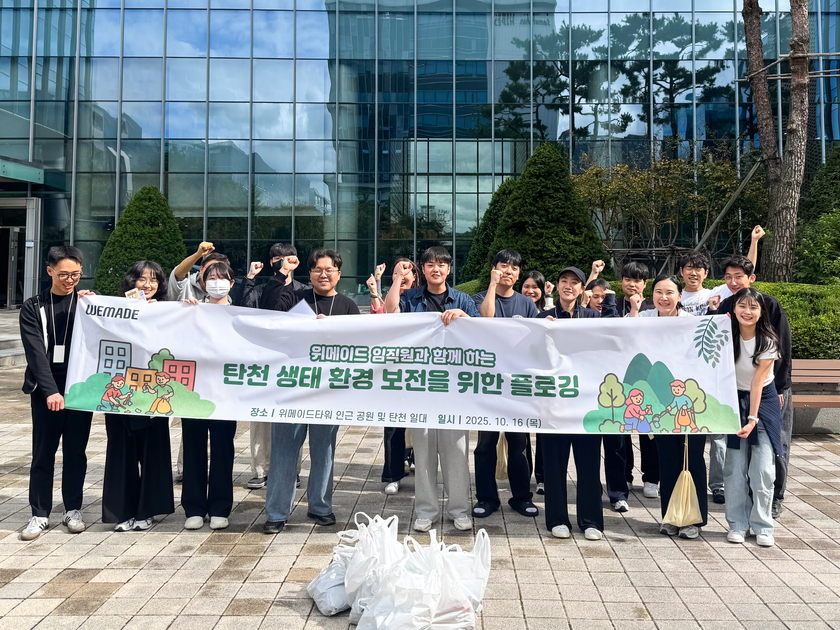
It was the route we took every day to and from work. It was a familiar landscape, a route with nothing particularly out of the ordinary. But as soon as we started walking with a pair of tongs in hand, things we hadn’t noticed before caught our eyes: cigarette butts, paper cups, and discarded masks. The path remained the same, but the moment we held the tongs, the scenery looked completely different.
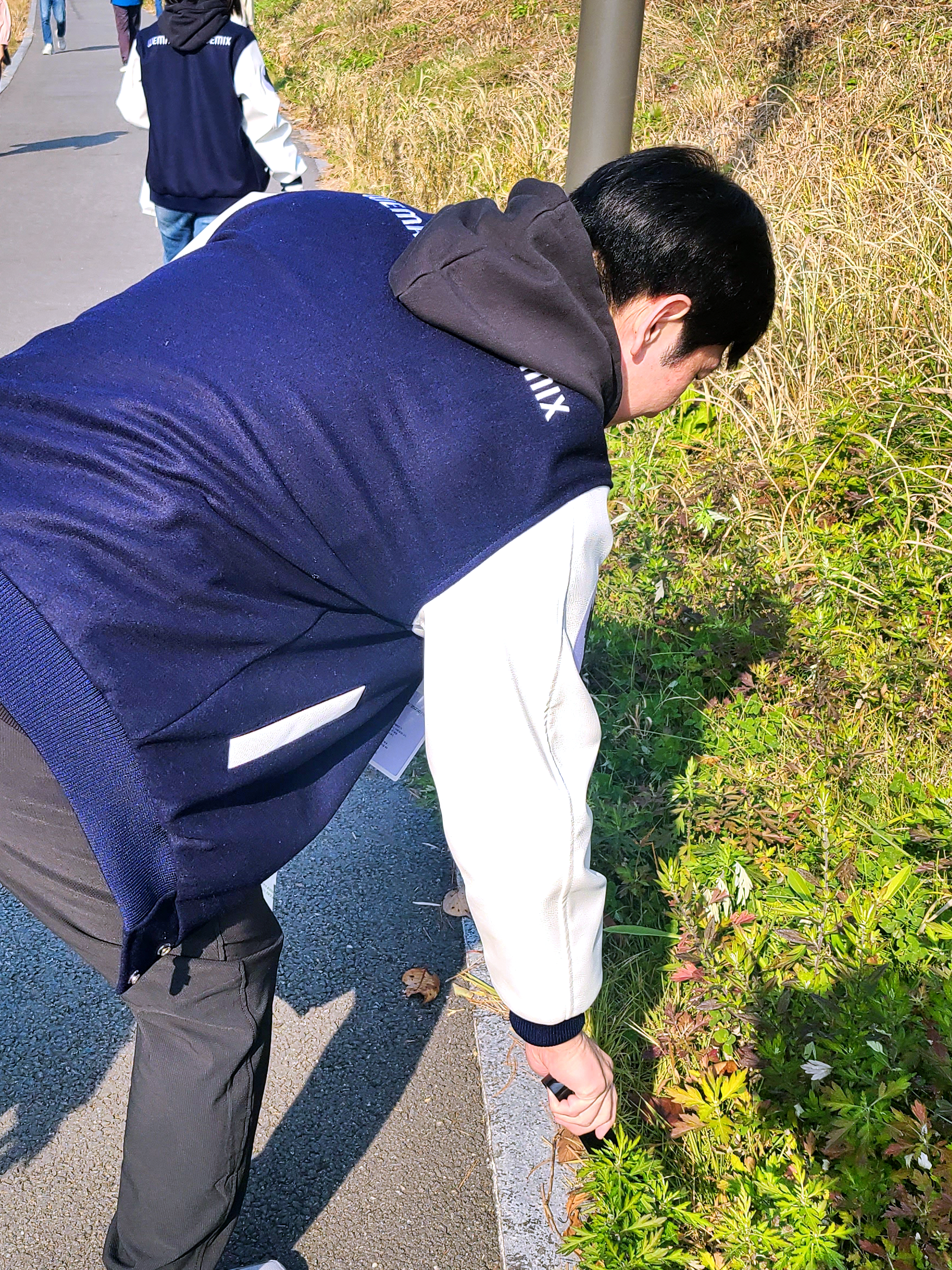
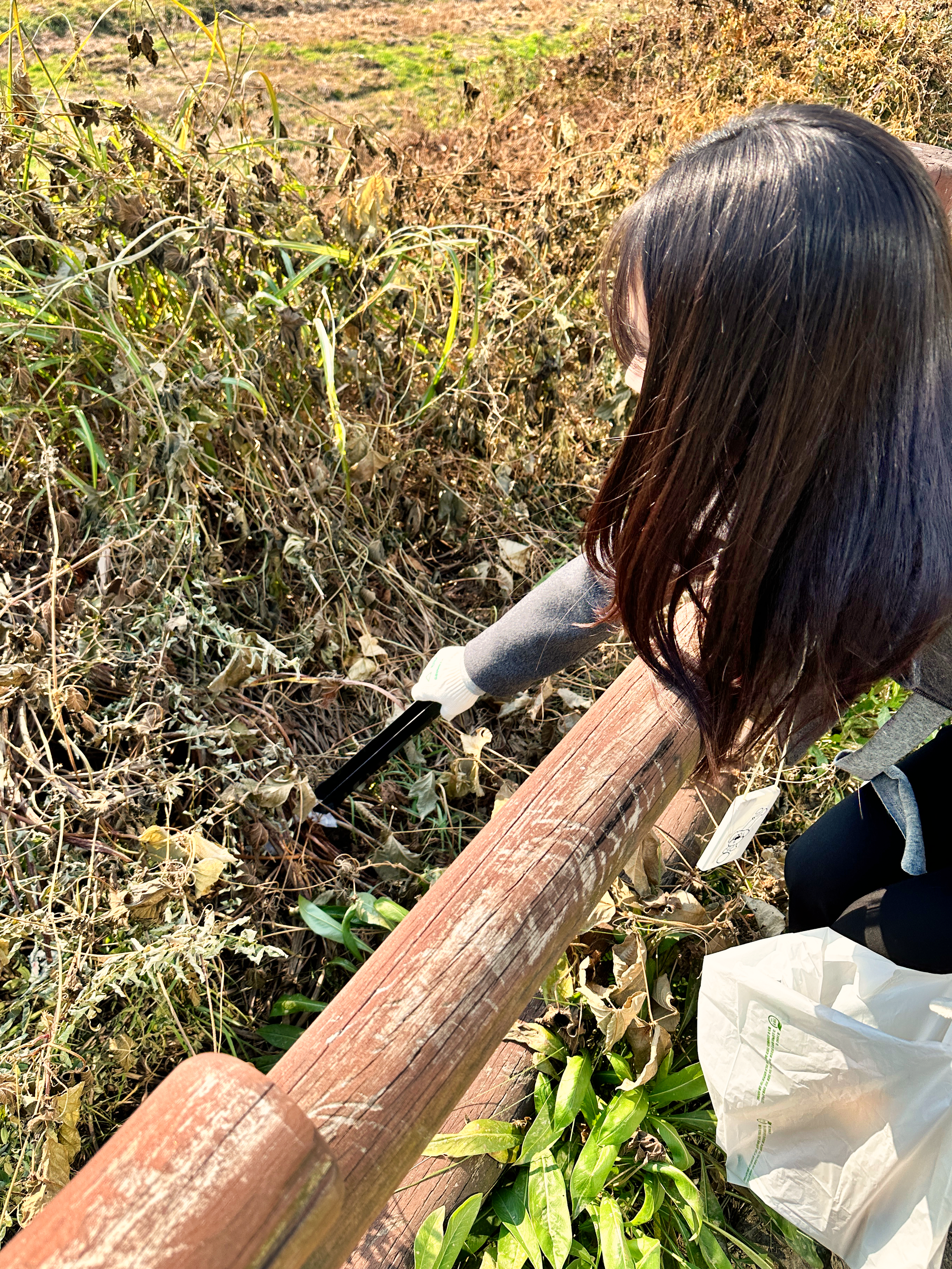
After walking for about 30 minutes, the bag in our hands felt quite heavy. We’d think, “We’ve probably picked up enough by now,” but as soon as we took a few more steps, we’d spot another piece of trash, so it was hard to stop.
Just like that, our one-hour lunch break flew by.
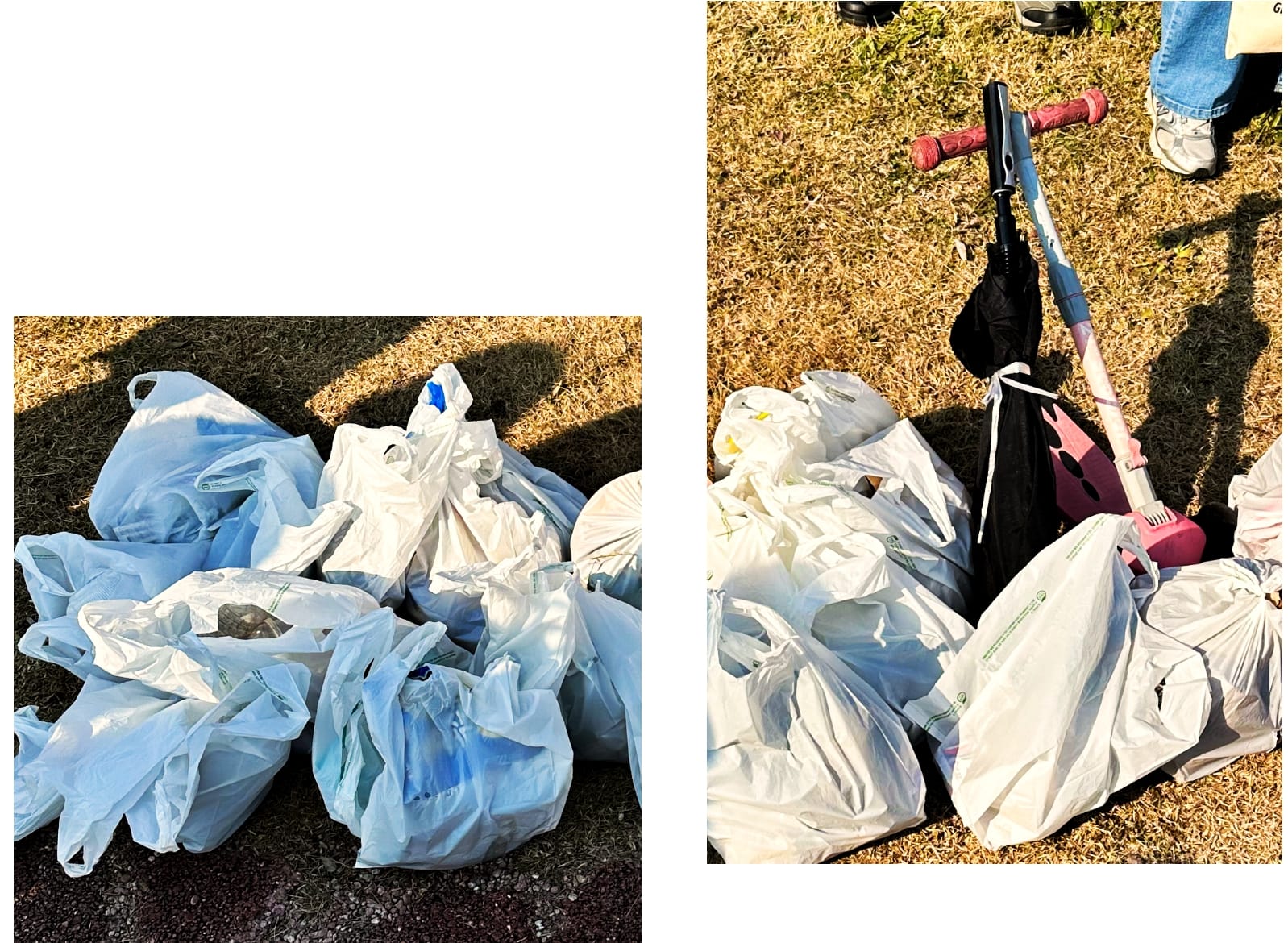
Plogging didn’t require any special equipment or a lot of time.
It’s about paying a little more attention to scenes you would normally just pass by and turning that awareness into action. ESG, which had always felt so distant, was beginning right there—with a simple shift in perspective on our commute.
Enter your text here
What the Snow Left Behind
A snow-covered winter mountain appears to be nothing more than a tranquil landscape. But even amid that stillness, countless forms of life were enduring the winter.
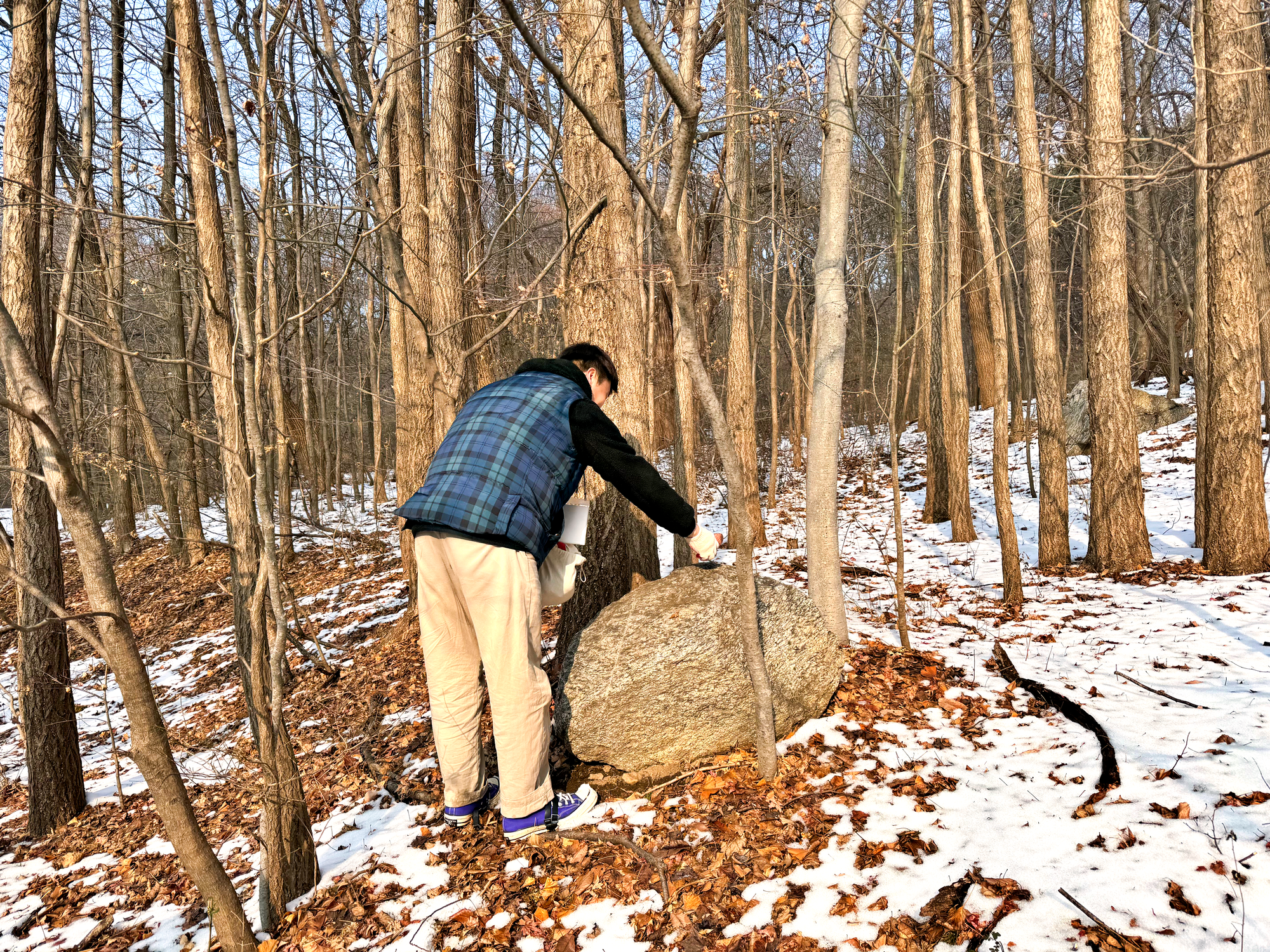
WEMADE employees visited Namhansanseong Provincial Park carrying hand warmers and bags of food to feed endangered wildlife and to document signs of wildlife.
They left food for the animals to help them survive the winter and recorded their habitat status by examining signs such as footprints and droppings. The data collected in this way is used to identify which species inhabit the area.
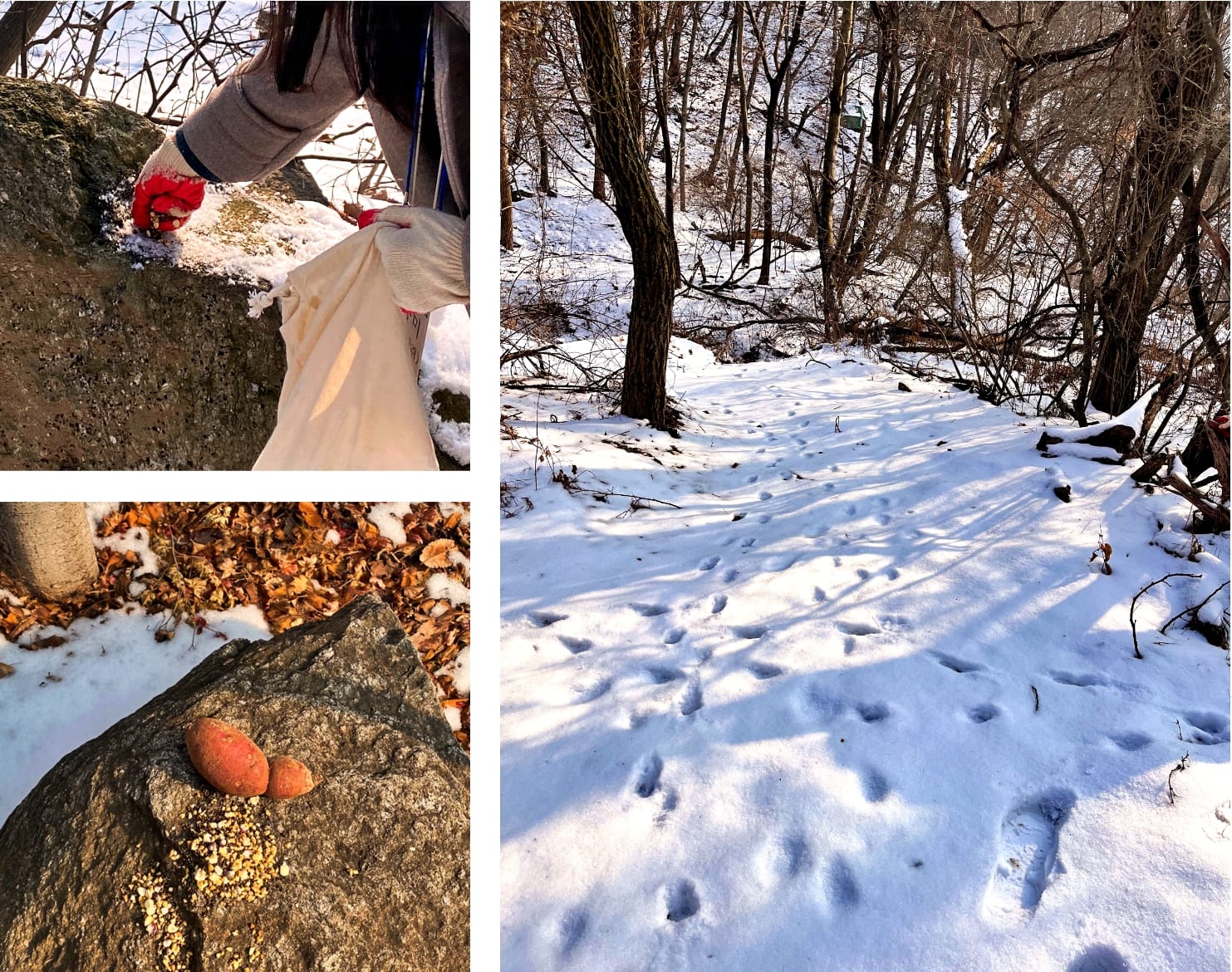
For us, it’s just a mountain we pass through briefly, but for wildlife, it’s their home—where they live day to day and prepare for the next season. A single tree, or a crevice between rocks can be a space essential for them to survive the winter—a fact we were finally able to feel a little more deeply.
Enter your text here
The Peaceful Wetland Wasn't What It Seemed
Our next stop was the Sujin Marsh Eco Park. The team members took up sickles and pruning shears to participate in an activity to remove invasive species.
Invasive species are non-native species or species that threaten ecosystems due to a rapid increase in population. In Korea, representative examples include Japanese knotweed and pigweed; once they take root, they quickly encroach on surrounding vegetation, so consistent removal efforts are necessary.
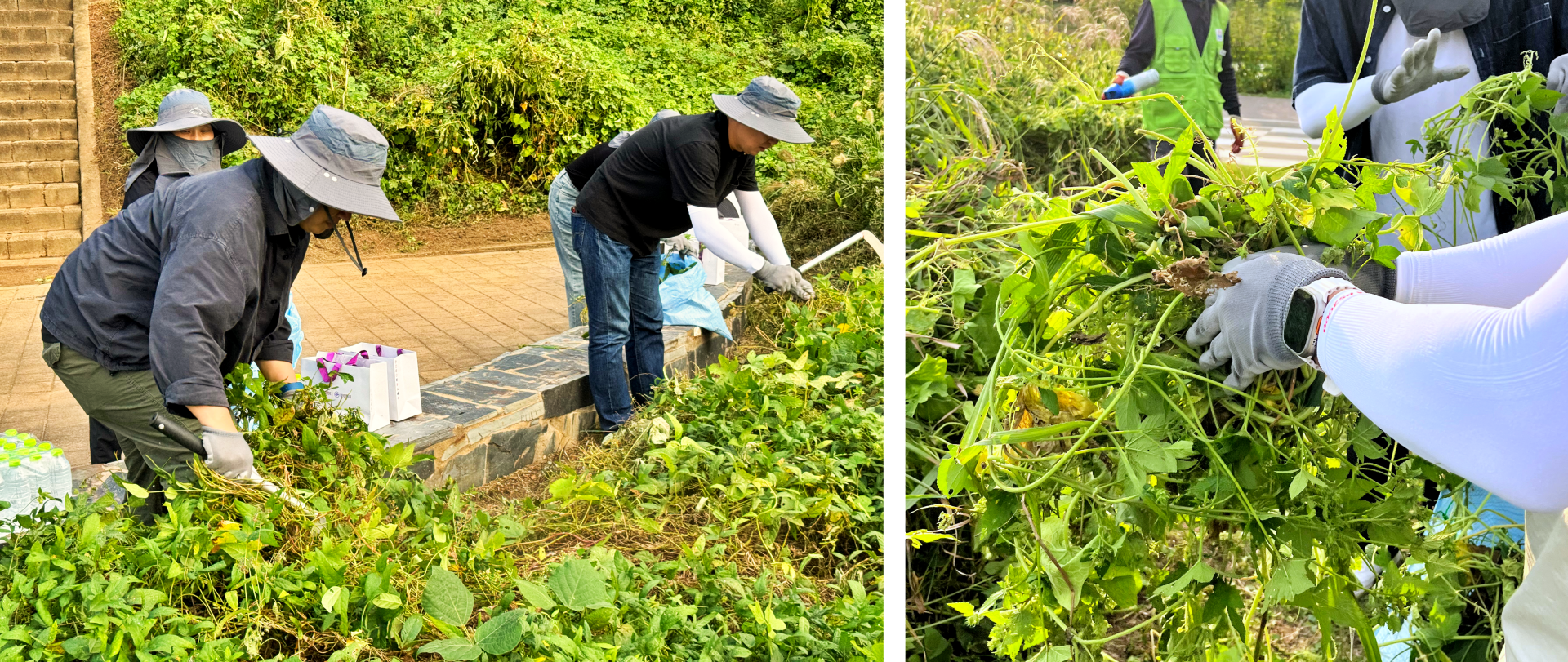
Seen from a distance, the wetland was a peaceful, green expanse of grass. But once we stepped inside, we realized that the tranquility of the grasslands wasn’t something that maintained itself on its own.
At first, we thought it would be over after cutting down just a few of the visible stems. But once we actually started, we found that some stems stretched several meters long, and the vines were tangled all over the place. We had to repeatedly cut the stems, clear away the tangled vines, and pull them out by the roots.
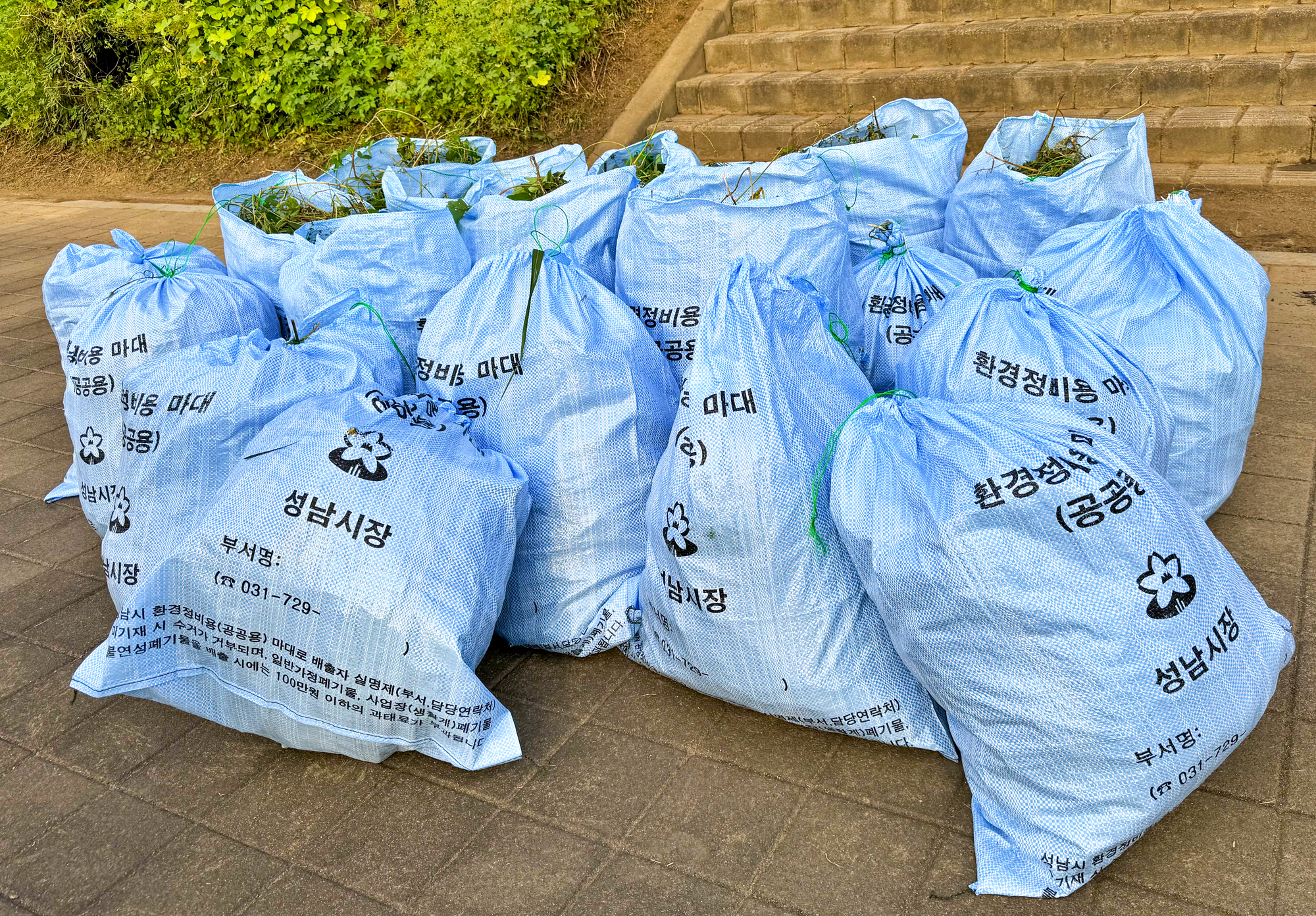
After two hours of work, we collected enough invasive species to fill 28 bags of 100 liters each.
Behind the scenery we perceive as peaceful lies an invisible balance, and maintaining that balance required far more attention and effort than we had anticipated.
Enter your text here
Beneath the Tranquil Lake
Ecological disruption wasn’t limited to the land above.
This time, we headed to Bundang Lake in Bundang Central Park. The goal was to remove invasive species like bass and bluegill, and river cooters that threaten the lake’s ecosystem.
The first thing we heard on site was, “Not all non-native species are bad.” However, some non-native species disrupt the ecological balance by taking food away from native species or occupying their habitats. What matters is not making vague distinctions, but examining the actual impact they have within the ecosystem.
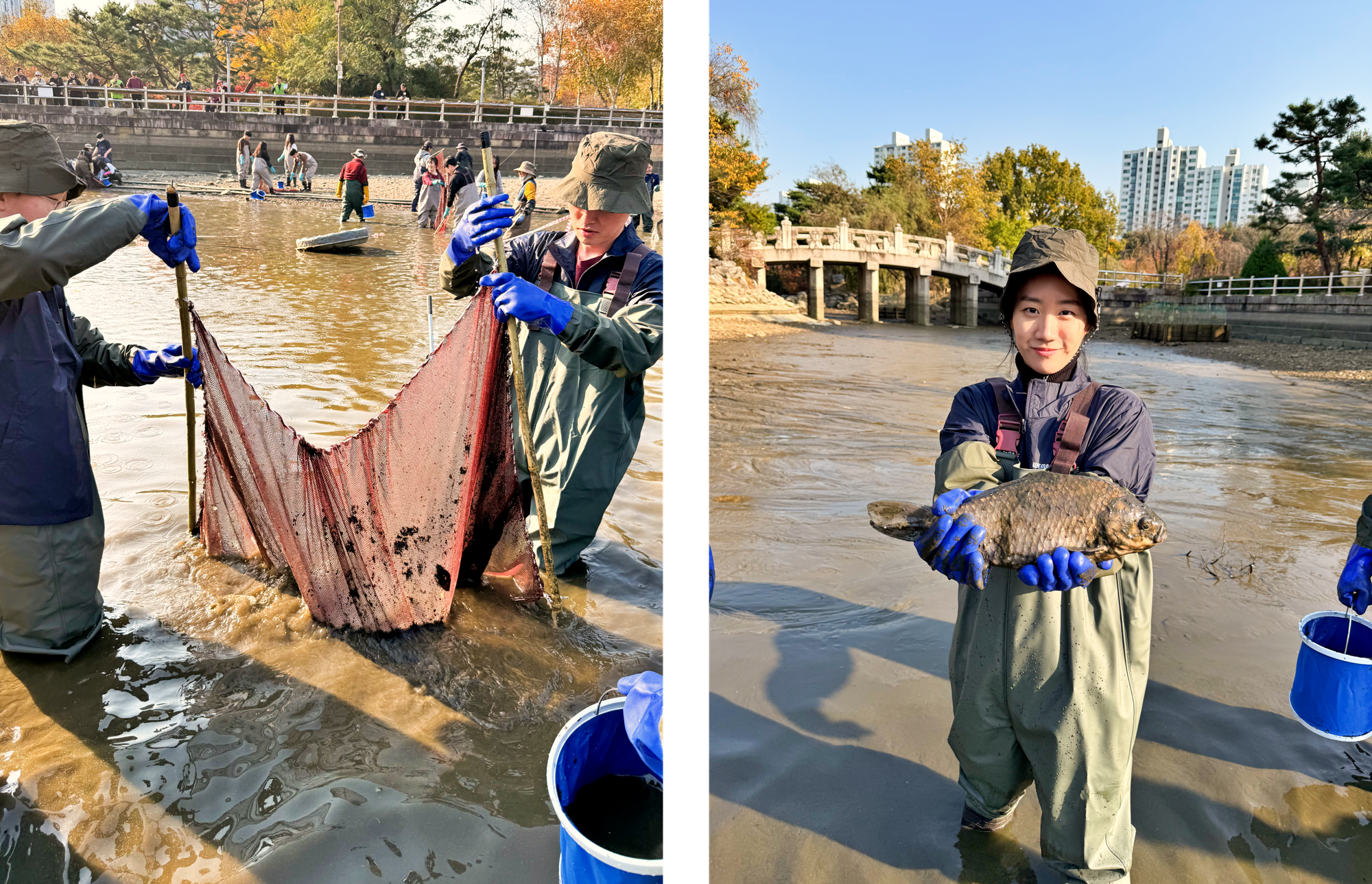
Until we actually waded into the water ourselves, Bundang Lake was just a tranquil lake we often saw from the walking path. But once we put on our chest waders and arm-length gloves, waded in, and began swinging our dip net, another side of the ecosystem—hidden beneath the calm surface— began to emerge.
Team members hauled fish out of the water and sorted invasive species from native fish. The invasive species were placed in containers, while the native fish were released back into the lake. After repeated efforts, the total number of invasive fish caught that day was 1,650.
Even beneath the lake’s seemingly tranquil surface, there was work we needed to do to maintain the ecosystem’s balance.
Enter your text here
When Three Steps Become a Barrier for Some
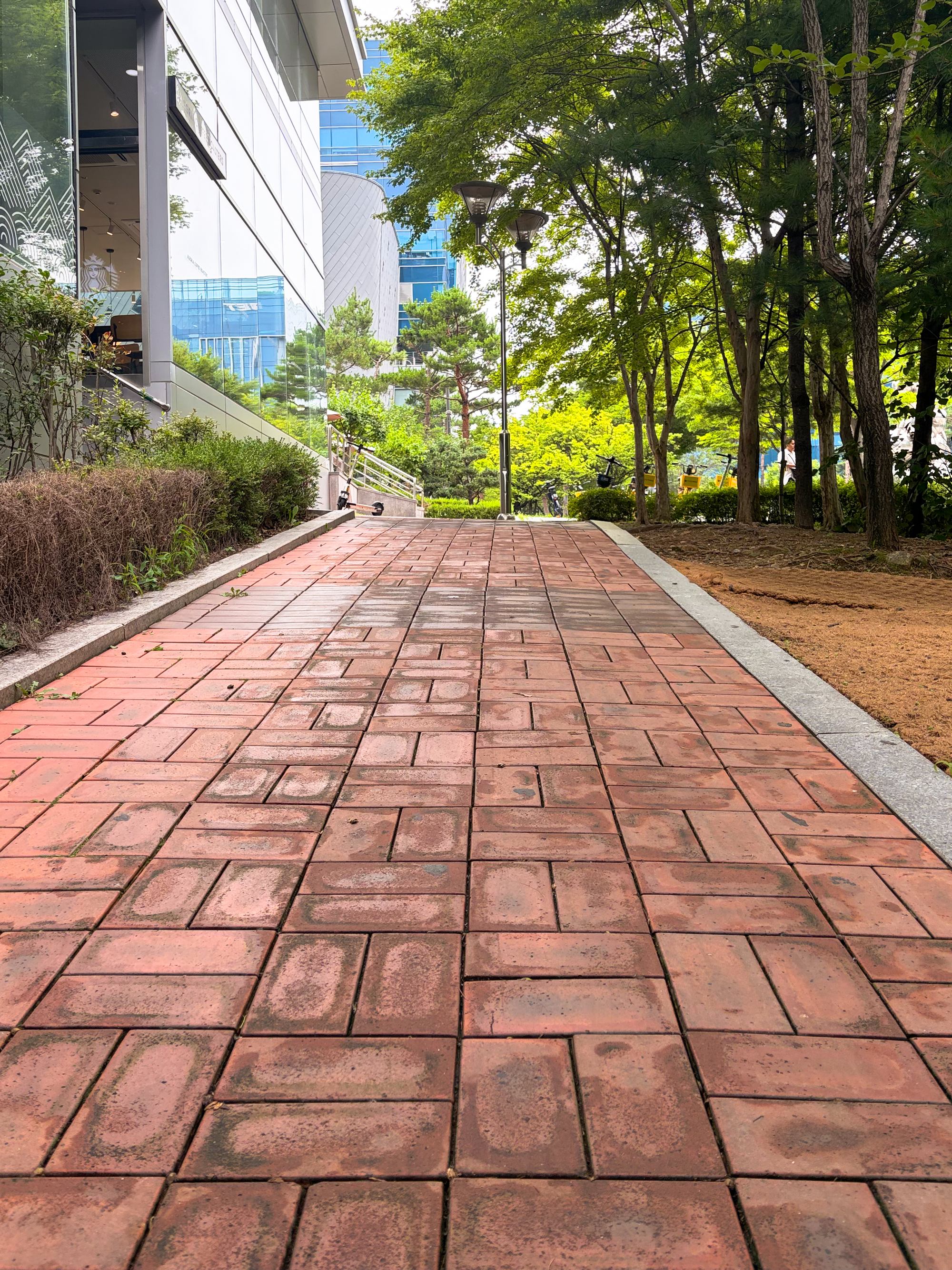
Three steps in front of a building. To some, it may be just another ordinary entrance. But for others, it can be a barrier that stops them in their tracks.
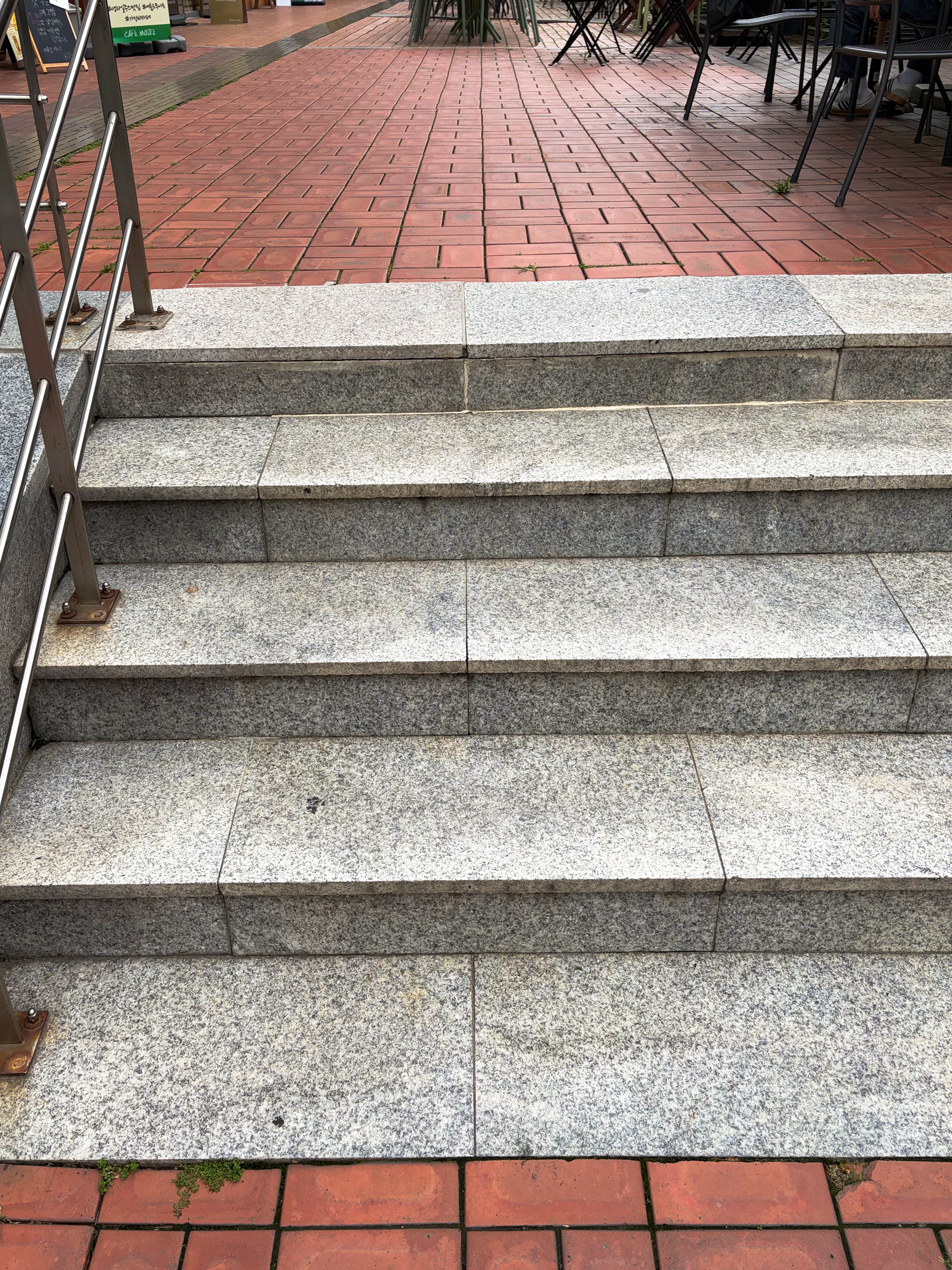
WEMADE employees participated in the “Stair Crusher,” an initiative that collects information on stairs and ramps and maps them. Information such as whether there are stairs, ramps, or whether an entrance is accessible—for many people, this is information they don’t need to worry about. But for people with mobility challenges, it’s essential information for planning their route before heading out.
If they know this information in advance, they can avoid situations where they get stuck right in front of their destination or have to take a detour to find another route.
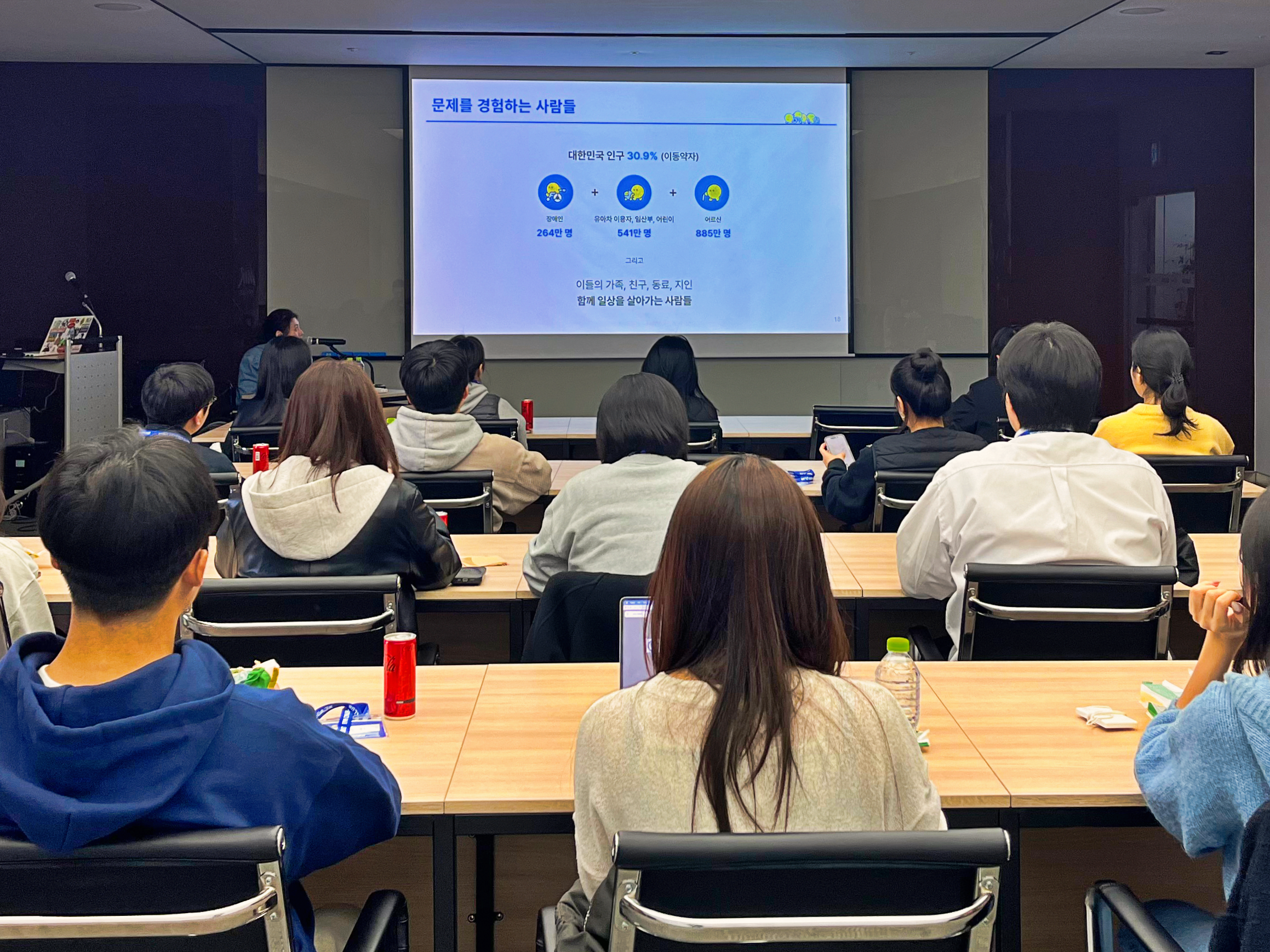
The words that stuck with us the most from the lecture by Park Su-bin, Founder of Stair Crusher, which we attended before the event, were: “Anyone can become mobility-impaired, and all people with mobility impairments are no different from us.”
The term “people with mobility challenges” does not refer to any specific group. Not only people who use wheelchairs or crutches, but also pregnant women, parents pushing strollers, people carrying heavy loads, and those with temporary injuries can all experience mobility difficulties. Creating an environment where everyone can move around safely ultimately benefits us all.
After the lecture, we went outside the office and, in pairs, checked the buildings near our office one by one. We looked for things like whether there were stairs at the entrance or if ramps were installed, and recorded our findings in the app. On that day, the 22 WEMADE volunteers surveyed 132 locations.
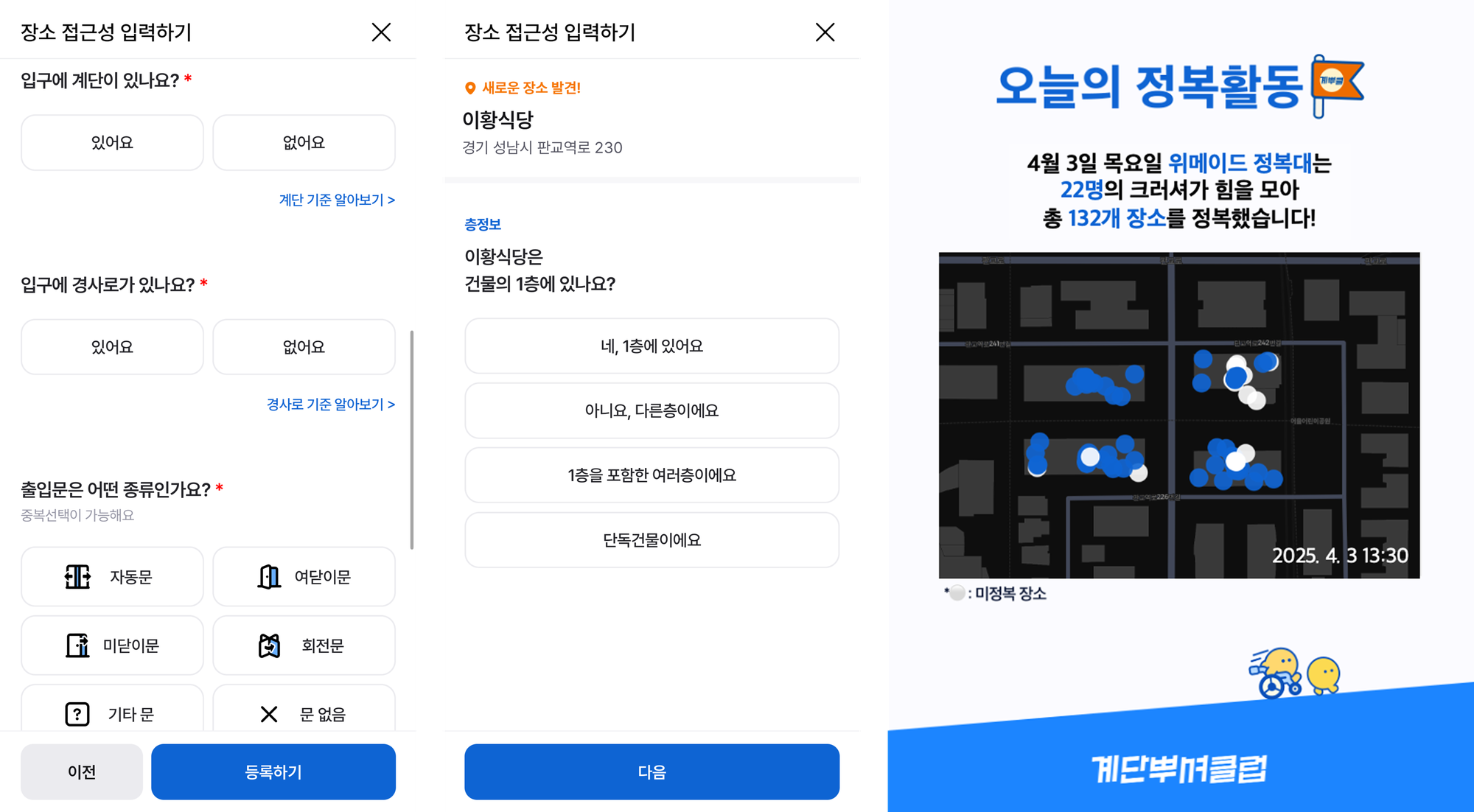
A single small piece of information can make it possible for someone to go out.
This activity made us realize that ESG isn’t just about the environment—it’s also about the way we live together.
Enter your text here
Change Starts Close to Home
Recently, WEMADE received an “AA” rating in the ESG assessment conducted by MSCI, a global ESG rating agency. The ESG assessment comprehensively reflects various indicators, including policies, governance, and climate change response. At the same time, the time our employees have spent directly experiencing and practicing ESG in their daily lives has also become a crucial foundation for WEMADE’s ESG culture.
Based on the voluntary participation of its employees, WEMADE continues to carry out various activities to ensure that ESG becomes an integral part of everyday culture. We will continue to create opportunities so that these small, everyday actions by our employees can be sustained in the future.
- Park Ji-won, WEMADE ESG team
Picking up trash on the way to and from work, recording wildlife tracks, monitoring the balance of the ecosystem, and marking small inconveniences that hinder someone’s movement on a map. While each of these is a small action, they were all efforts to better understand the environment and society in which we all live.
The ESG activities that WEMADE members are carrying out also begin with these small discoveries. We believe that when these small, local actions accumulate, change toward a better environment and society can gradually begin.